


Only 6 left!
Ohishi Gyuto (Chefs Knife) Blue Steel #2, Kuro, 240mm
Ohishi Gyuto (Chefs Knife) Blue Steel #2, Kuro, 240mm
Quick stats: Reactive Carbon Blue #2

Couldn't load pickup availability


Description
Ohishi Blue #2 Kuro Gyuto 240mm – Handmade Japanese Knife
Handmade in Sanjo, Japan by Tadafusa. Some of the best-value handmade Japanese knives I've ever used.
The Ohishi Blue #2 Kuro range delivers incredible cutting performance without the expensive handmade price tag.
Made with Aogami (Blue) #2 carbon steel and stainless cladding, these knives offer excellent sharpness, edge retention and easier maintenance than fully reactive carbon steel.
Thin behind the edge with almost laser-like cutting performance, yet built like a proper kitchen workhorse.
At around $200–$300 AUD, the performance is ridiculous for the money.
Quick Points
- Handmade in Sanjo, Japan by Tadafusa
- Aogami / Blue #2 carbon steel core
- Stainless clad for easier maintenance
- Excellent sharpness and edge retention
- Laser-ish cutting with workhorse construction
- Great first carbon steel Japanese knife
- Rosewood D-shaped handle (right-handed)
Why This Works
Blue #2 is an excellent Japanese carbon steel, known for taking a fine edge, strong edge retention and easy sharpening.
The stainless steel cladding protects the outer blade faces, while the exposed carbon steel cutting edge delivers the performance people love about traditional Japanese knives.
The edge can still patina or rust if neglected, but maintenance is much easier than with a fully reactive blade.
The grind is the real standout.
These knives are incredibly thin behind the edge, cutting through food with very little resistance.
They also have substantial construction around the handle and neck, unlike many mass-produced knives near this price.
Real Use
The Ohishi Blue #2 Kuro Gyuto is ideal for anyone wanting a real handmade carbon steel Japanese knife without going fully reactive.
The Gyuto, or Japanese chef knife, is a multipurpose knife and is considered to be one of the most versatile Japanese knives for chefs and home cooks who like a longer knife. A Gyuto can be used to do a large range of tasks, such as slicing, dicing, and mincing.
Perfect for:
- Vegetables and herbs
- Boneless meats
- Fish
- Fruit
- General home and professional prep
It has the cutting feel of a much more expensive Japanese knife, while remaining practical enough for everyday use.
Who It's For
- First-time carbon steel knife buyers
- Professional chefs wanting excellent value
- Home cooks upgrading from entry-level knives
- Anyone wanting handmade Japanese performance
- Cooks comfortable maintaining a carbon steel edge
- Someone who likes longer knives
Pros
- Exceptional performance for the money
- Handmade by Tadafusa
- Excellent Blue #2 carbon steel
- Stainless clad for easier maintenance
- Thin behind the edge
- Sharpens well
- Beautiful traditional Kuro finish
- Strong construction around the handle
Cons
- Carbon steel edge can rust or patina
- Hard steel can chip if misused
- Right-handed D-shaped handle
- Handmade finish can vary
- Limited availability
- Not the most visually striking knife
Leigh's 2 Cents
Tadafusa makes some of the best-value Japanese knives on the market. Period.
I own several Ohishi knives myself, and they remain some of my favourites.
The cutting performance is ridiculous. These knives genuinely cut like knives costing $600 or more, yet sell for a fraction of that.
They have that laser-like cutting feel through food, but still feel like a real kitchen workhorse.
For someone wanting their first handmade carbon steel Japanese knife, I struggle to recommend anything better for the money.
One of my favourite ranges and consistently loved by customers.
Cannot. Recommend. Enough.
Knife Care
The outer cladding is stainless, but the exposed Blue #2 cutting edge is reactive.
- Wash and dry immediately after use
- Expect a natural patina along the cutting edge
- Avoid bones, frozen food and twisting cuts
- Never use a dishwasher
- Apply knife oil before long storage
- Avoid abrasive cleaners on the Kuro finish
Specifications
- Brand: Ohishi
- Maker: Tadafusa (blade)
- Region: Sanjo, Niigata, Japan
- Knife type: Santoku (All purpose Knife)
- Steel: Aogami / Blue #2 carbon steel
- Cladding: Stainless steel
- Finish: Kuro (black) / Tsuchime (hammered)
- Blade length: 238mm
- Blade thickness: 3.1mm at handle / 2.0mm near tip
- Overall length: 398mm
- Blade height: 49mm
- Weight: 213g
- Hardness: 62–63 HRC
- Bevel: Double
- Handle: D-shaped rosewood (right-handed)
These are handmade Japanese knives. Small variations in finish, grind and measurements are normal.
Knife Care


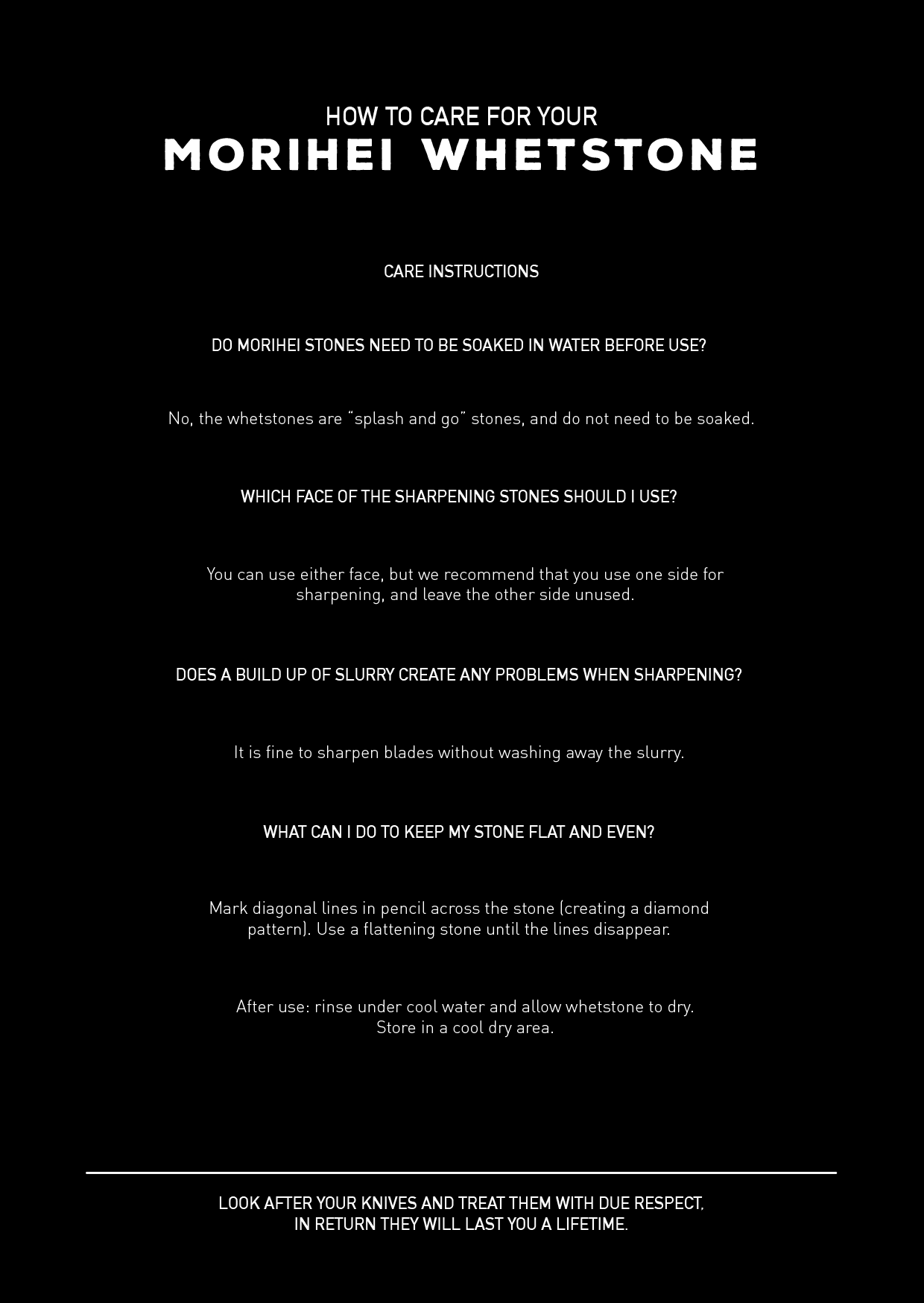
Whetstone Care

About Use
Hi, my name is Leigh, and I’m a chef from Newcastle, Australia.
I’ve been cooking professionally for over 20 years in some of Australia’s top restaurants, and I’m currently cooking at The Signal Box in Newcastle.
Over the years (since 2018), I’ve put together a small collection of high-quality Japanese knives and whetstones that I personally recommend. Basically, if I wouldn’t use it in a professional kitchen, I don’t sell it. Read More

FREE SHIPPING
Free Shipping over $150 (Australia only)

SUPER FAST SHIPPING
No large wharehouse packing delays

CHEF TESTED PRODUCTS
All items inspected prior to shipping by a professional chef of 20+ years.
Japanese Knives. Sharpening Tips. No Spam.
Get sharpening tips, new Japanese knife arrivals, product reviews and exclusive sale alerts from a working chef.