


Only 3 left!
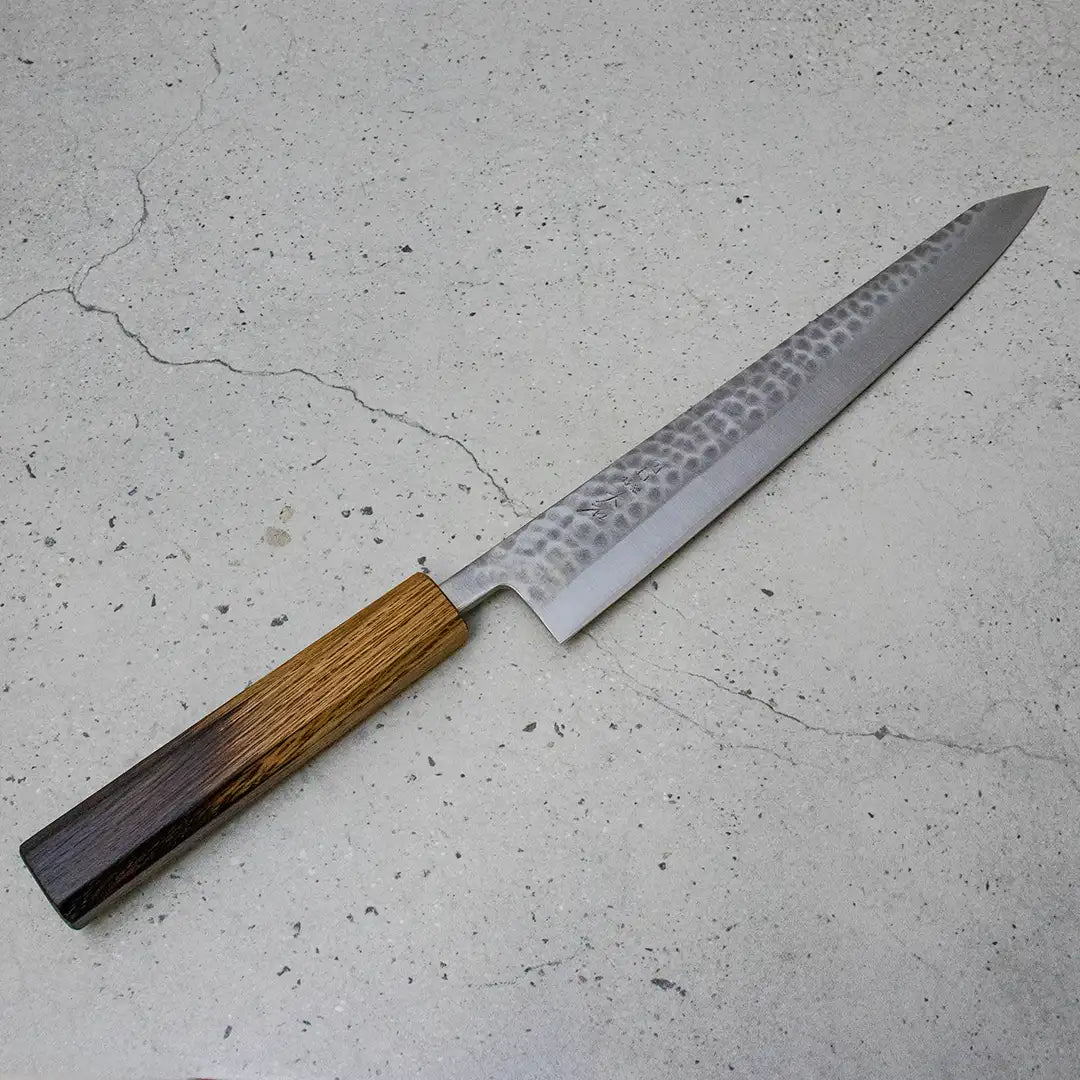
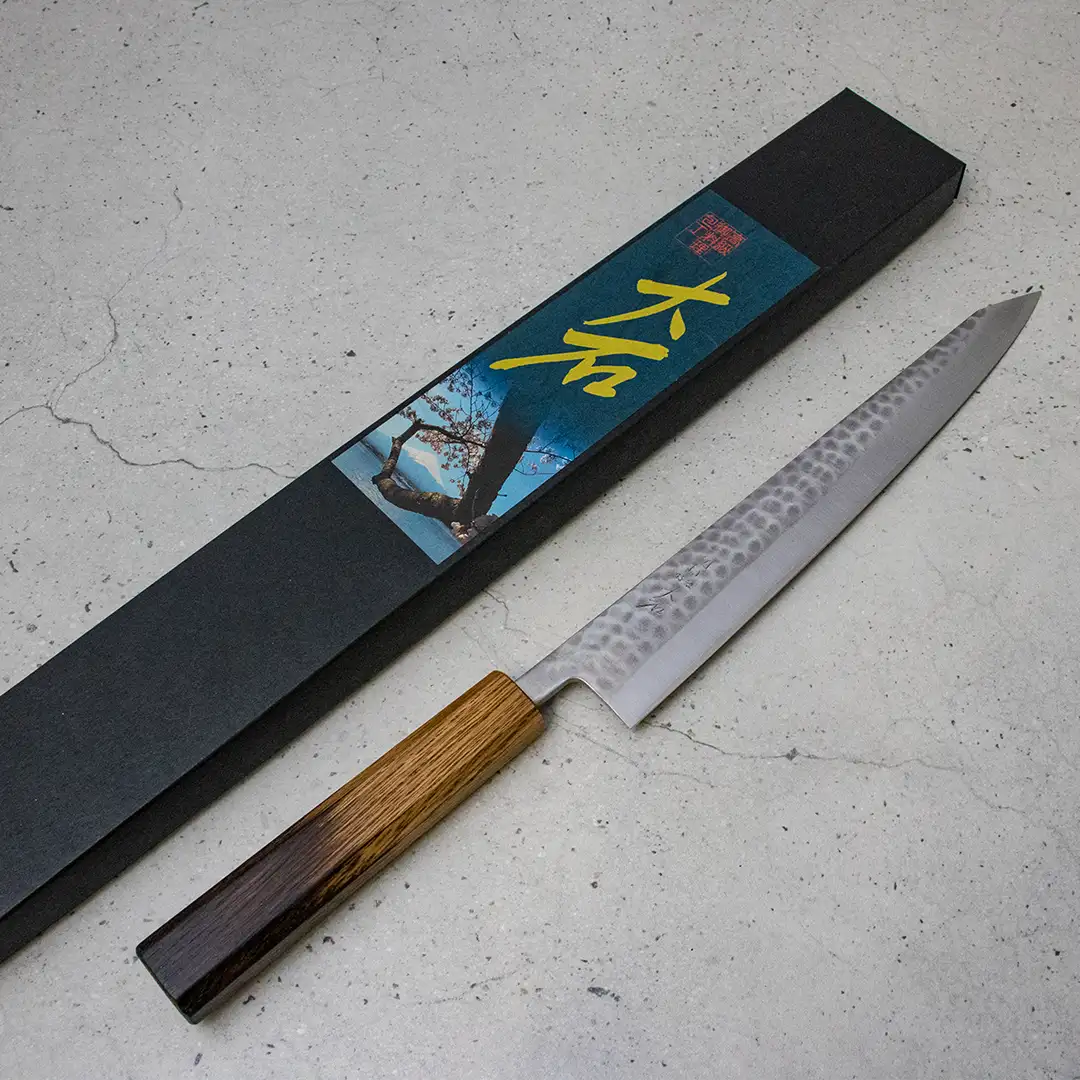
Ohishi SLD Steel Sujihiki (Carving Knife) 240mm burnt oak handle:
Ohishi SLD Steel Sujihiki (Carving Knife) 240mm burnt oak handle:
Quick stats: Semi-Stainless SLD

Couldn't load pickup availability
Description
Ohishi SLD Sujihiki 240mm – Burnt Oak Handle
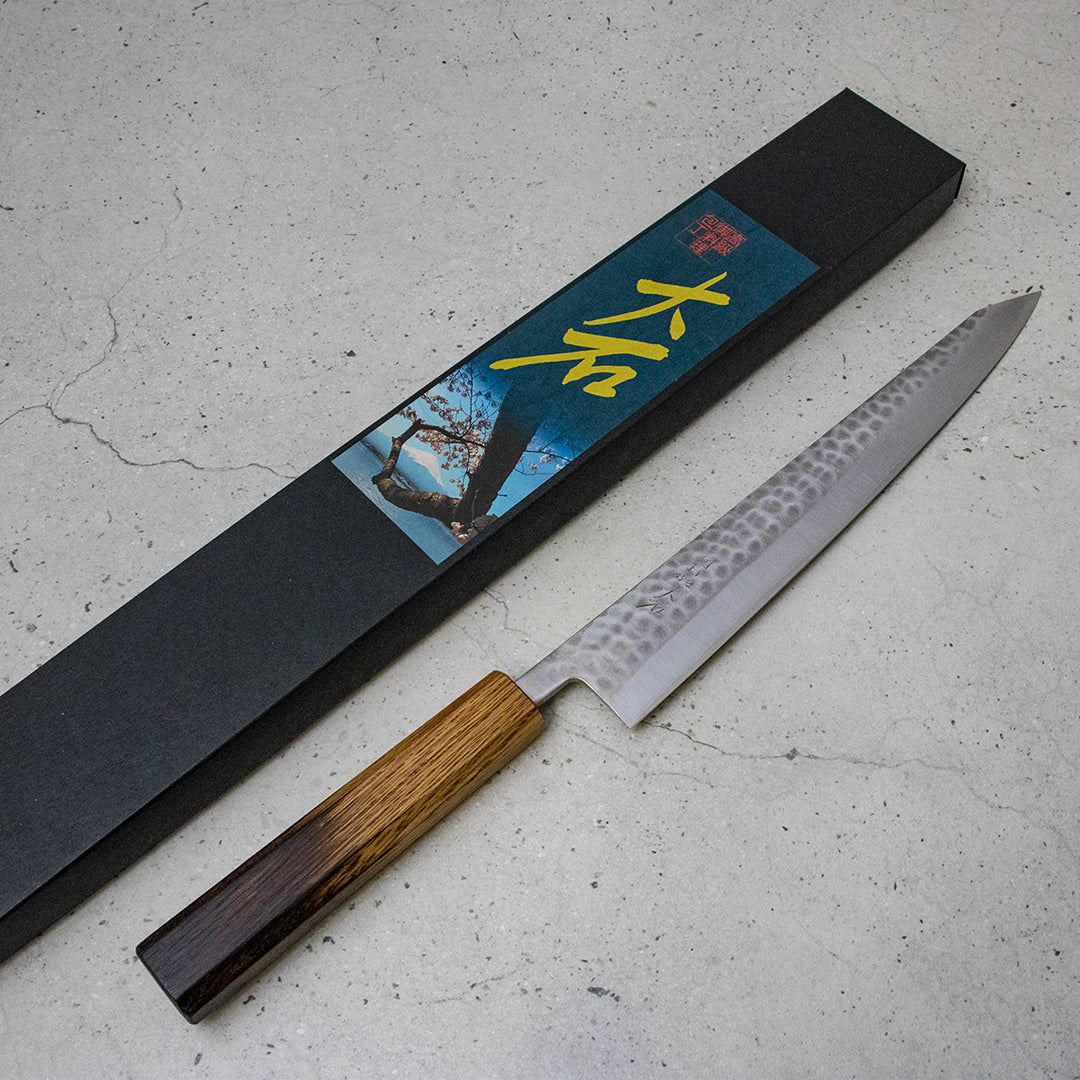
The Ohishi SLD Sujihiki is a serious handmade slicing knife with excellent performance for the price.
Handmade in Sanjo, Japan by Tadafusa, these knives have the performance, looks and build quality of knives that usually cost a lot more.
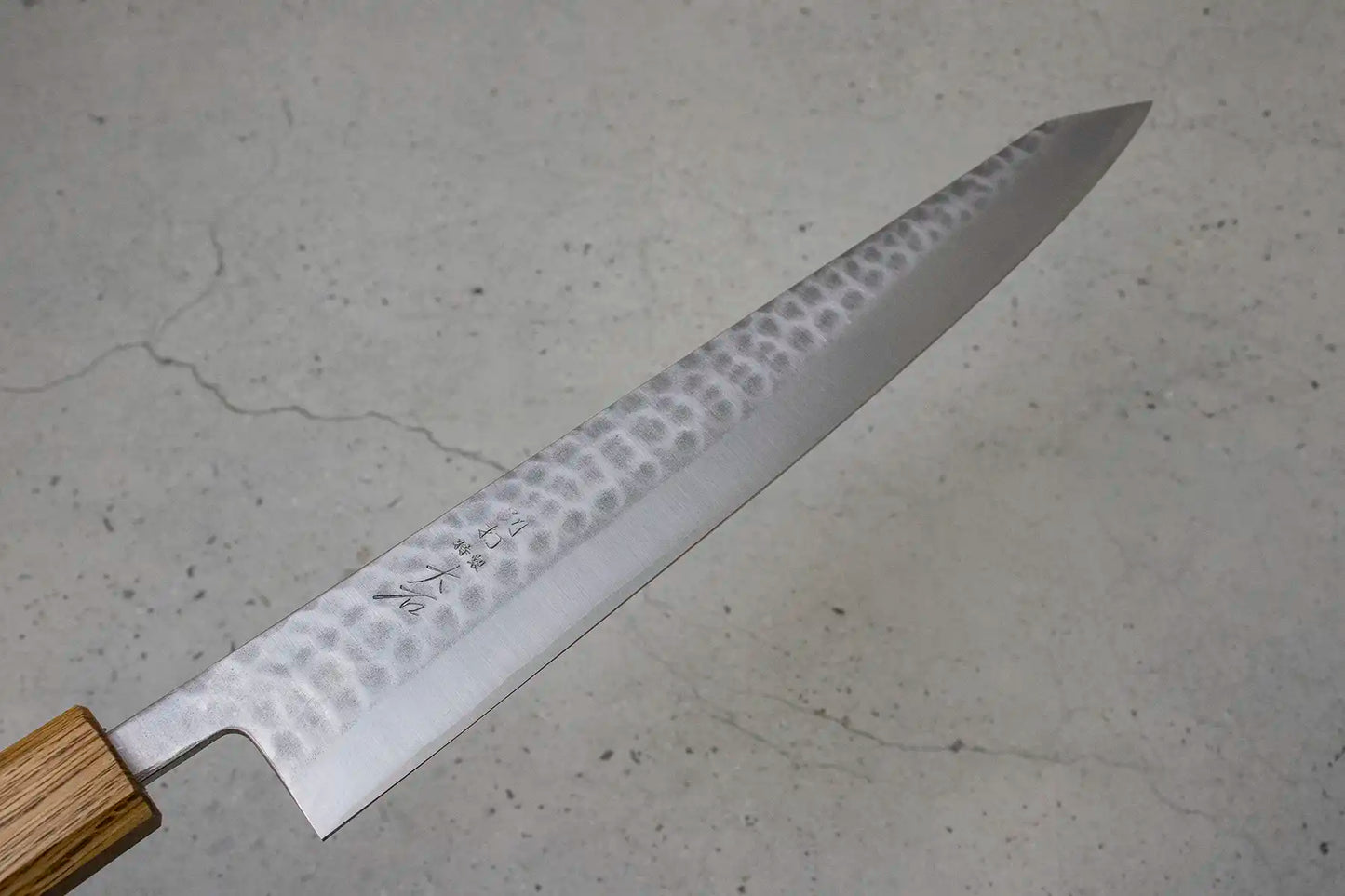
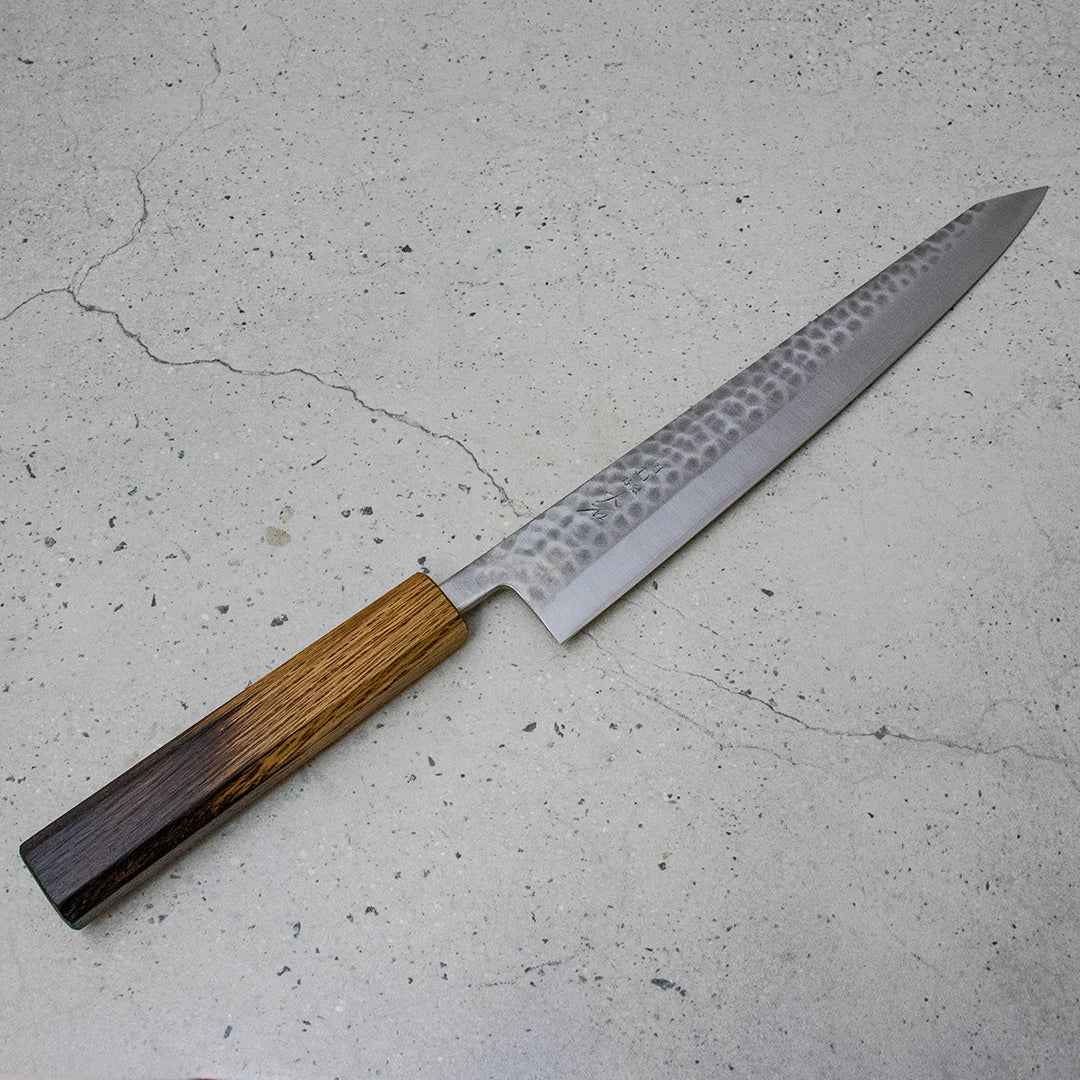
The polished tsuchime finish looks excellent, the burnt oak handle gives it a clean premium feel, and the SLD steel delivers serious cutting performance without the full maintenance of carbon steel.
If you want a handmade Japanese slicing knife that cuts cleanly, looks great, and is easier to live with than full carbon steel, this is one of the easiest knives to recommend.
Quick Points
-
Handmade in Sanjo, Japan by Tadafusa
-
SLD semi-stainless steel core
-
Stainless clad for easier maintenance
-
Excellent slicing performance
-
Sujihiki profile for carving, slicing and portioning
-
Thin behind the edge yet handles like a workhorse
-
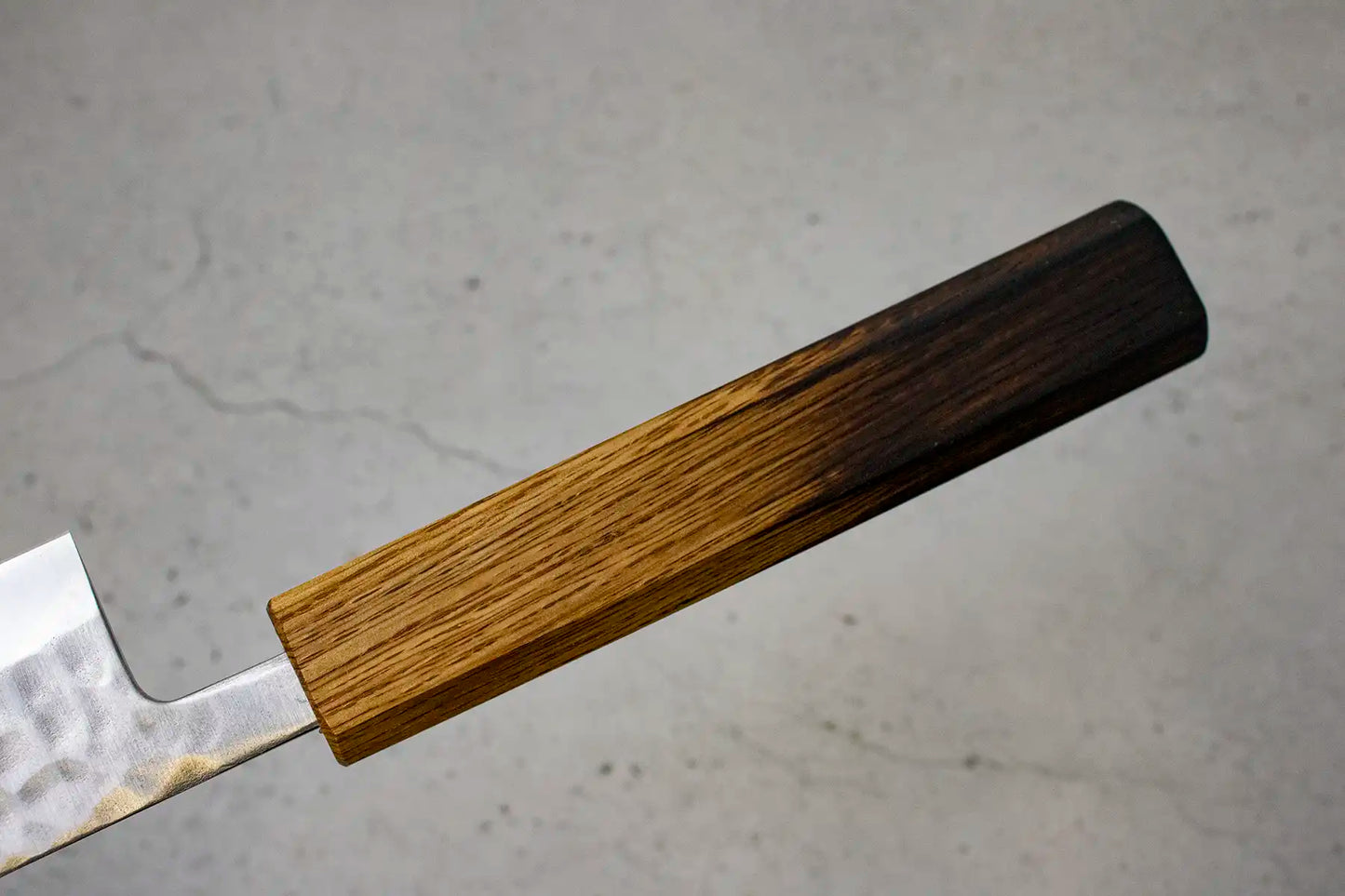
Octagonal burnt oak handle
-
Carbon-steel-like performance with better corrosion resistance
-
One of the best-value handmade slicing knives in its category
-
Great for professional chefs and serious home cooks
Why This Works
SLD is one of my favourite steels for people who want high performance without going fully into carbon steel maintenance.
It is often described as a semi-stainless steel. It has enough chromium to give better corrosion resistance than traditional carbon steels, but it still sharpens and cuts more like a carbon steel than many standard stainless steels.
That is the main appeal.
You get excellent cutting feel, strong edge performance and better day-to-day rust resistance than a fully reactive knife.
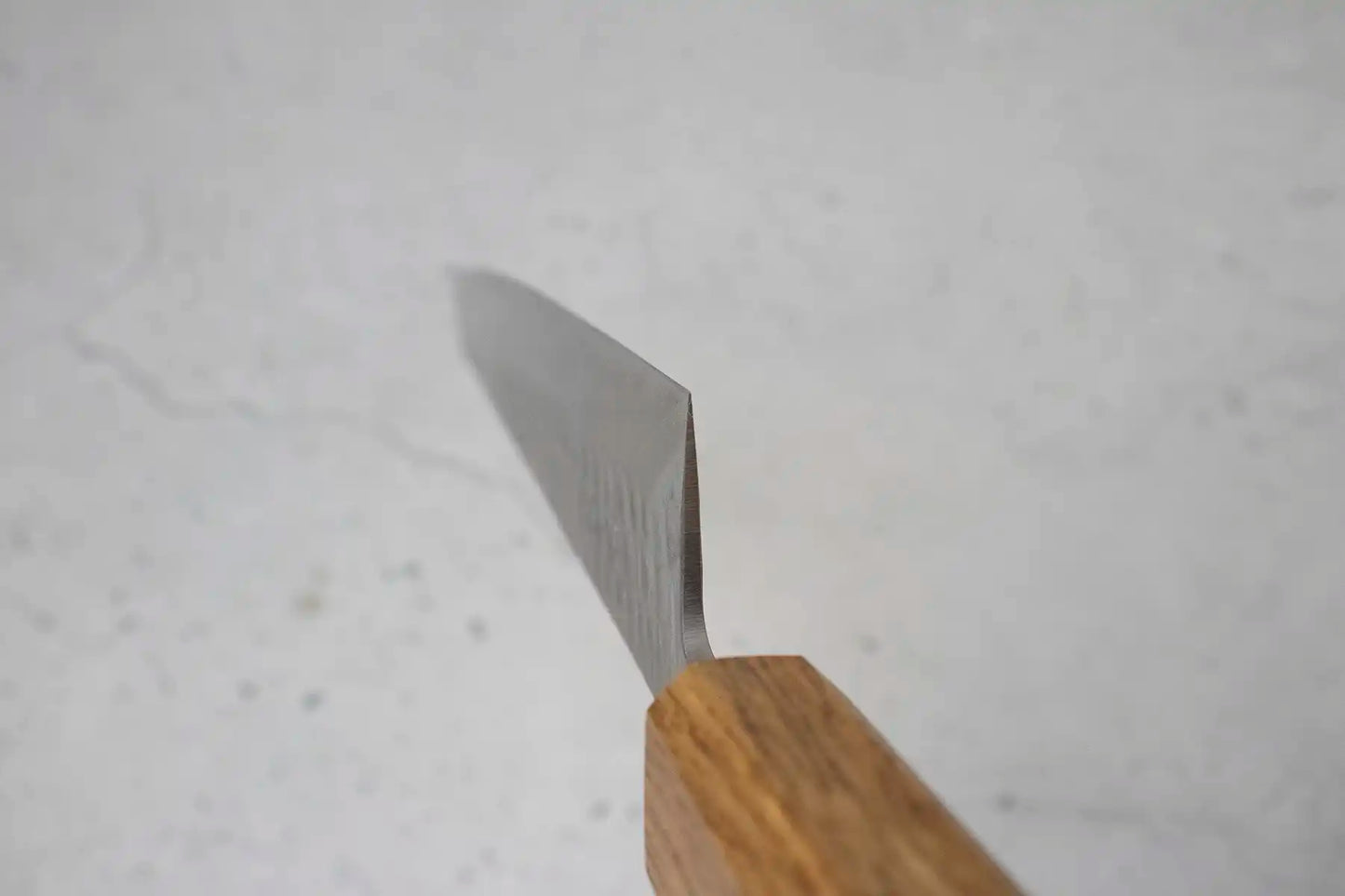
The grind is the standout. These knives are thin behind the edge and move through food extremely well, but they still feel like practical kitchen workhorses rather than fragile showpieces.
Real Use
The sujihiki is designed for slicing.
It excels at:
-
Slicing cooked meats
-
Portioning proteins
-
Carving roasts
-
Slicing fish
-
Breaking down boneless proteins
-
Clean, long pulling cuts
-
Service and plating work
-
Professional kitchen use
Compared with a gyuto, the sujihiki has a narrower blade and longer slicing profile. This helps reduce drag and gives cleaner slices through meat and fish.
The 240mm length gives you enough blade for smooth slicing without feeling too large for most kitchens.
The Ohishi SLD Sujihiki cuts extremely well for the price. It has that clean, efficient Japanese cutting feel, but with enough confidence to use regularly in a working kitchen.
Handmade Construction
One of the strengths of this range is the build around the handle and neck of the knife.
Many mass-produced knives around this price point can feel weak where the blade meets the handle. The Ohishi SLD feels more substantial through this section, which gives the knife a stronger and more confident feel in hand.
You still get a thin, high-performance edge where it matters, but the knife does not feel flimsy or underbuilt.
Who It’s For
-
Professional chefs wanting a dedicated slicing knife
-
Home cooks who roast, carve or slice proteins regularly
-
Cooks who want cleaner slices than a chef knife can provide
-
Anyone wanting a handmade Japanese slicer without full carbon maintenance
-
People upgrading from entry-level carving knives
-
Left- or right-handed users
Pros
-
Excellent slicing and carving performance
-
Handmade in Sanjo by Tadafusa
-
SLD semi-stainless steel
-
Easier to maintain than full carbon steel
-
Thin behind the edge
-
Sharpens well
-
Beautiful polished tsuchime finish
-
Premium-looking burnt oak handle
-
Great balance of performance, looks and practicality
-
Suitable for left- and right-handed users
Cons
-
SLD is semi-stainless, not fully stainless
-
Can still patina or mark if left wet or dirty
-
Hard steel can chip if misused
-
Not for bones, frozen food, hard twisting cuts or rough treatment
-
Not as versatile as a gyuto for everyday chopping
-
Handmade finish and measurements can vary slightly
Leigh’s 2 Cents
This is an easy sell for anyone who actually needs a proper slicer.
The Ohishi SLD range gives you a lot for the money: handmade Sanjo construction, excellent grinds, great looks, and seriously impressive cutting performance.
The sujihiki is not the first knife most people should buy, but if you regularly slice proteins, carve roasts, portion fish or want cleaner presentation, it makes a lot of sense.
The cut tests I’ve done with these knives are extremely impressive. They perform much closer to carbon steel than most people expect, but they are easier to maintain than a full carbon knife.
For a professional chef or serious home cook wanting a REAL handmade Japanese slicing knife without jumping into full carbon steel care, this is a very easy recommendation.
One of the best-performing semi-stainless knife ranges I’ve used as a chef of 20 years.
Cannot recommend enough.
Knife Care
SLD is more corrosion resistant than carbon steel, but it is not completely maintenance-free.
-
Wash and dry after use
-
Do not leave the knife wet or sitting in food
-
Expect some patina or marking over time
-
Avoid bones, frozen food and twisting cuts
-
Do not put it in the dishwasher
-
Use a proper chopping board
-
Store safely when not in use
-
Apply knife oil before long storage if needed
About Ohishi
Ohishi knives are handmade in Sanjo, Niigata, Japan by Tadafusa.
The Ohishi name comes from a small village near Mount Fuji, where the Akifusa business is located.
Specifications
-
Brand: Ohishi
-
Maker: Tadafusa
-
Region: Sanjo, Niigata, Japan
-
Knife type: Sujihiki / Slicing Knife
-
Steel: SLD semi-stainless steel
-
Cladding: Stainless steel
-
Finish: Polished tsuchime / hammered
-
Blade length: 242mm
-
Blade thickness: 3.5mm at handle / 1.4mm near tip
-
Overall length: 395mm
-
Blade height: 36mm
-
Weight: 155g
-
Hardness: 62–63 HRC
-
Bevel: Double
-
Handle: Octagonal burnt oak
-
Handedness: Left and Right
Knife Care


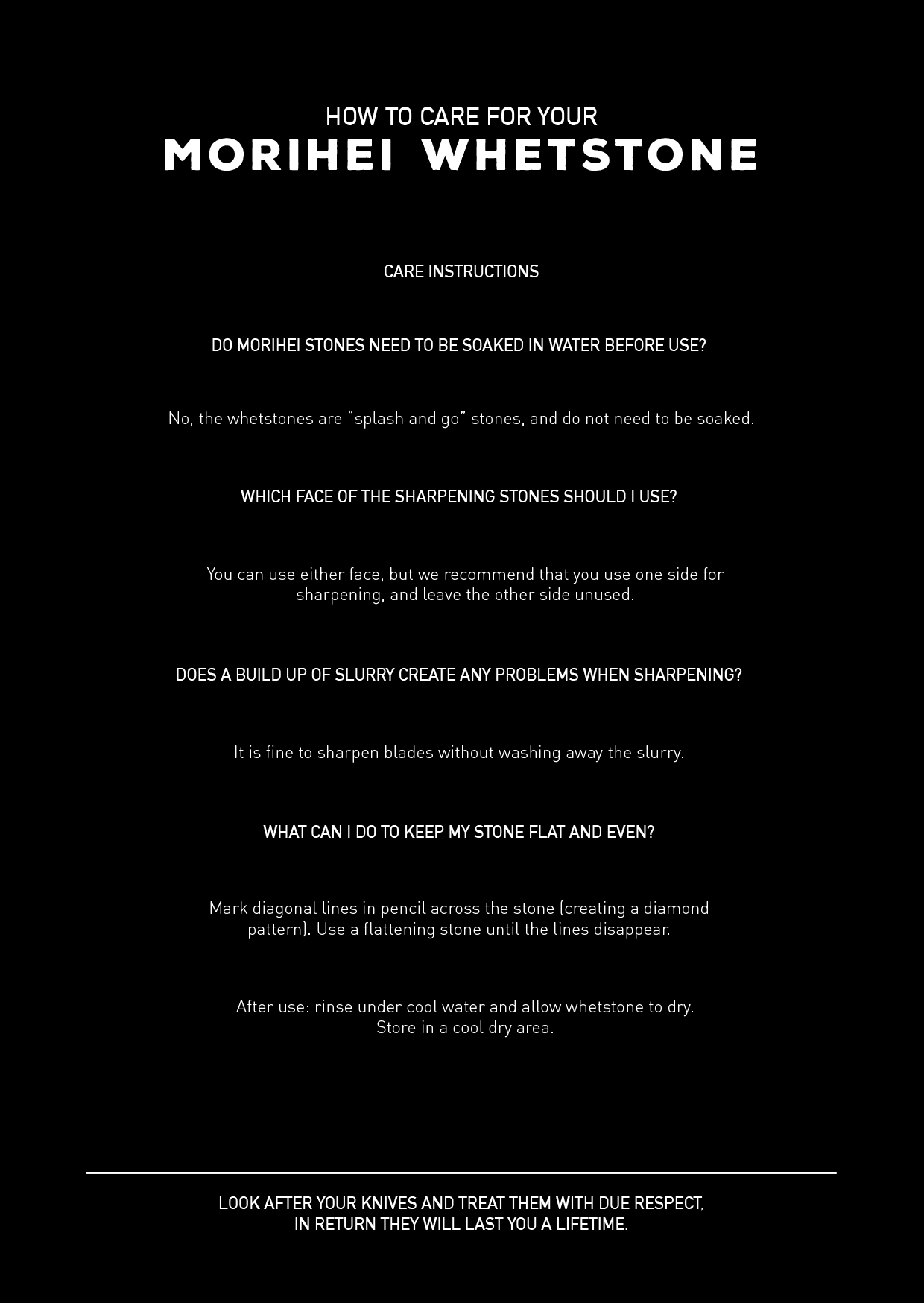
Whetstone Care

About Use
Hi, my name is Leigh, and I’m a chef from Newcastle, Australia.
I’ve been cooking professionally for over 20 years in some of Australia’s top restaurants, and I’m currently cooking at The Signal Box in Newcastle.
Over the years (since 2018), I’ve put together a small collection of high-quality Japanese knives and whetstones that I personally recommend. Basically, if I wouldn’t use it in a professional kitchen, I don’t sell it. Read More

FREE SHIPPING
Free Shipping over $150 (Australia only)

SUPER FAST SHIPPING
No large wharehouse packing delays

CHEF TESTED PRODUCTS
All items inspected prior to shipping by a professional chef of 20+ years.
Japanese Knives. Sharpening Tips. No Spam.
Get sharpening tips, new Japanese knife arrivals, product reviews and exclusive sale alerts from a working chef.